FlexCode Systems
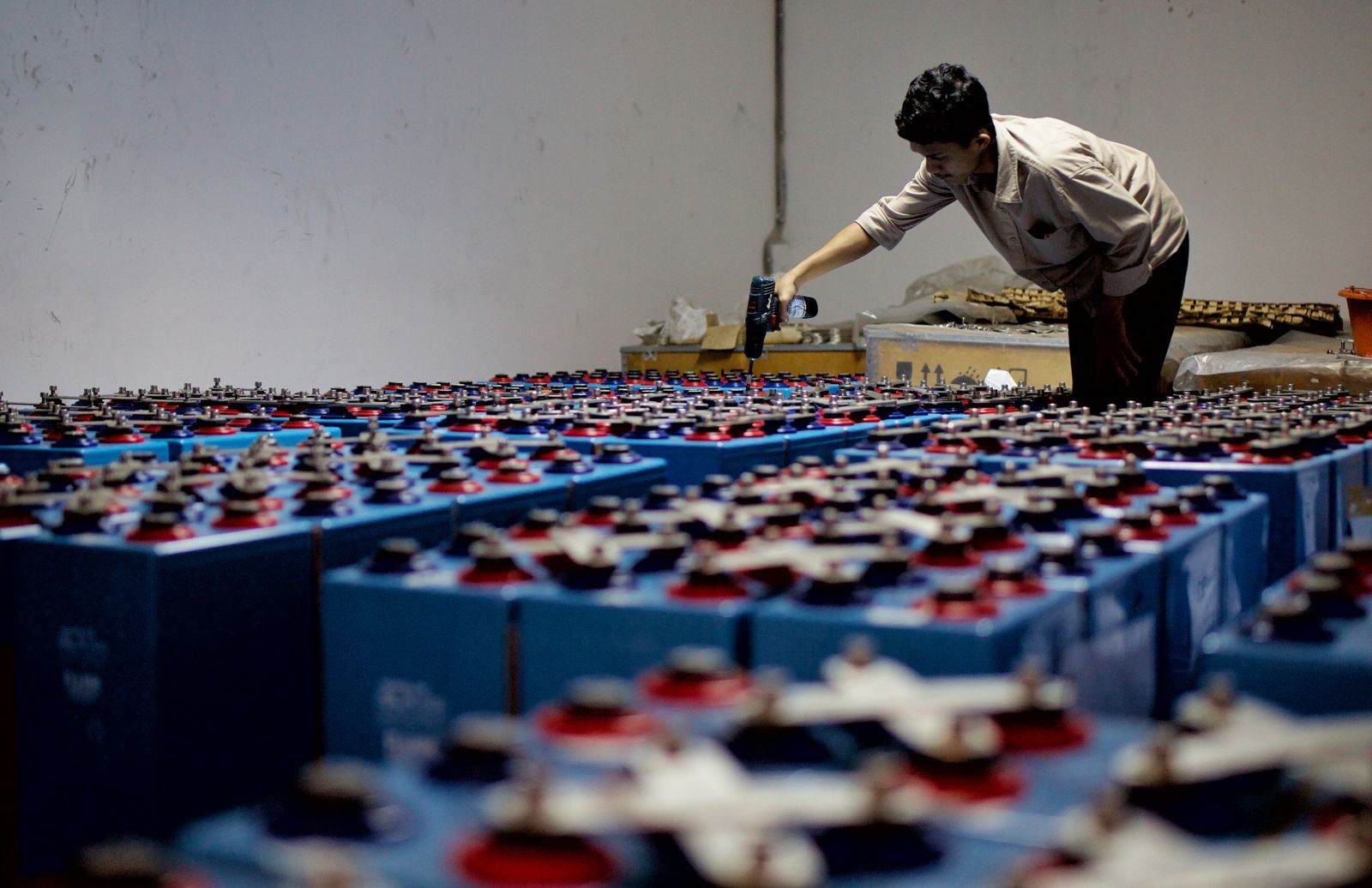
From 18 February 2027, every e-bike battery, every industrial battery above 2 kWh and every electric vehicle battery placed on the EU market needs a digital battery passport. Each individual battery gets its own electronic record, reachable through a QR code on the battery, with data on its composition, performance, origin and later life.
That is less than five months away. For manufacturers, importers and anyone who assembles battery packs, the QR code is the easy part. The hard part is the data behind it: which cells went into which pack, what the supplier declared about materials and recycled content, which tests the battery passed, and what happened to it after the sale. That is an operations problem, and it is where an ERP like Odoo becomes the backbone of compliance.
This guide summarises what the EU Batteries Regulation requires, what is still open, and how to map each requirement to a concrete process in Odoo. It is a practical overview, not legal advice, so check the details for your products with your legal counsel.
The battery passport is defined in Article 77 of the EU Batteries Regulation, Regulation (EU) 2023/1542. The core rules are short:
The passport obligation applies to three categories:
All other batteries also need a QR code from 18 February 2027, but for them it leads to the label information, the EU declaration of conformity and information on collection and recycling, not to a full passport.
If you make products with built-in batteries, a second date matters too. From 18 February 2027, portable batteries in products must be removable and replaceable by the end user, with some exceptions, and LMT batteries, including their individual cells, must be replaceable by an independent professional. That is a design question first, but it also affects your spare parts and service processes.
Annex XIII of the regulation lists the content in four access levels:
The information only has to be included to the extent it applies to your battery category. Some fields, such as the carbon footprint declaration, only become mandatory when their own rules apply to your category, and several of those depend on Commission acts that are still pending.
| Date | What applies |
|---|---|
| 18 August 2025 | Separate collection symbol on all batteries |
| 18 February 2027 | Battery passport for LMT, industrial above 2 kWh and EV batteries, QR code on all batteries, removability and replaceability rules |
| 18 August 2027 | Supply chain due diligence obligations, postponed from 2025 by Regulation (EU) 2025/1561 |
Two open points are worth knowing:
Printing a QR code takes a day. Filling the passport behind it correctly for every single battery is a process that touches almost every department:
If this data lives in spreadsheets, supplier emails and separate tools, every passport becomes manual work. If it lives in one system with a clear serial number per battery, the passport becomes an output of your normal processes.
Odoo will not issue the passport on its own, but it can be the system where the passport data is created, linked and kept up to date. Here is how we map the requirements.
Each battery model becomes a product in Odoo with structured fields for the public passport data: chemistry, rated capacity, voltage range, expected lifetime, warranty period, critical raw materials and recycled content. Standard Odoo does not ship these fields, so we add them with Odoo Studio or a small custom module. The declaration of conformity, safety information and dismantling documents are attached to the product, with versions, so the passport always points to the current document.
The passport is per battery, so every unit needs its own identity. Odoo tracks products by serial number through production, stock, delivery, returns and repairs. We configure the serial number format so it can serve as, or map to, the unique identifier the regulation requires. If you use GS1 identifiers to meet the ISO/IEC 15459 requirement, Odoo's barcode app supports the GS1 nomenclature. A consistent rule-based barcode and labelling system keeps this manageable across many models.
In Odoo Manufacturing, bills of materials define which cells, modules and BMS boards make up a pack. When production consumes lot-tracked cells, Odoo records which lots went into which serial number. The traceability report then shows the full chain in both directions: from a finished battery back to the cell lot and supplier, and from a supplier lot forward to every battery that contains it. That is exactly what you need when a supplier changes a material or a cell batch turns out to be faulty. If you are still planning production on whiteboards, our article on real-time shop floor visibility in Odoo 19 shows where to start.
Composition, recycled content and sourcing information usually come from your suppliers. In Odoo Purchase, we attach the required supplier declarations to the vendor and the purchased product, and set up quality checks at goods receipt so that a cell lot cannot be released to production without its documents. That also prepares you for the due diligence obligations from August 2027.
With the Odoo Quality app, end-of-line tests become quality checks on the production order. Measured values such as capacity and internal resistance are stored against the serial number, and test reports are attached as documents. When an authority asks for proof, you can find it per battery instead of searching through file shares.
Odoo prints labels per serial number, and the QR code on the label can contain the link to the battery's passport. Label layout, size and placement on the battery or packaging are configured once and then printed automatically from production.
When a battery comes back for repair, is replaced under warranty, is remanufactured or is returned for recycling, Odoo already records the event against the serial number through returns, the Repairs app and stock moves. We add the passport status (original, repurposed, re-used, remanufactured, waste) as a field on the serial number, and create a new serial number linked to the original for a remanufactured or repurposed battery.
To be clear about the limits: standard Odoo is not a battery passport platform. It does not host passports with the four access levels, manage legitimate-interest access, or guarantee availability if your company ceases to exist. Live usage data such as state of health and charge cycles also comes from the battery management system, not from the ERP.
The practical setup for most companies is therefore Odoo as the data source plus a specialised digital product passport service for hosting and access control. FlexCode connects the two through Odoo's API, so that every new serial number, test result and status change in Odoo updates the passport automatically. For small series with mainly public data, a simpler setup can be enough, but that decision should wait until the access rules are published.
With less than five months left, a practical sequence looks like this:
When does the battery passport become mandatory?
From 18 February 2027, under Article 77 of Regulation (EU) 2023/1542. From that date, each covered battery placed on the EU market or put into service must have a battery passport, accessible through a QR code on the battery.
Which batteries need a battery passport?
LMT batteries such as e-bike and e-scooter batteries, industrial batteries with a capacity greater than 2 kWh, and electric vehicle batteries. Other batteries need a QR code from the same date, but it leads to label and conformity information rather than a full passport.
Who is responsible for the battery passport?
The economic operator that places the battery on the market, usually the manufacturer or importer. It must keep the information accurate, complete and up to date and may authorise another operator to act on its behalf. After repurposing or remanufacturing, the operator that places the battery on the market again takes over.
Has the battery passport deadline been postponed?
No. The supply chain due diligence obligations were postponed to 18 August 2027 by Regulation (EU) 2025/1561, but the battery passport date of 18 February 2027 has not changed. The Commission's implementing act on access rights for persons with a legitimate interest is late and planned for the fourth quarter of 2026.
Can Odoo create the battery passport?
Odoo can hold and link most of the data: product data per battery model, serial numbers, component traceability, supplier documents, test results and status changes. Hosting the passport with its access levels is usually done by a specialised passport service that receives the data from Odoo through an integration.
What is the first practical step?
Map each piece of passport data to where it comes from today, and close the gaps with your suppliers early. Supplier data on composition, recycled content and sourcing usually takes the longest to collect.
The battery passport turns product data into a regulated, long-term commitment for every single battery you sell. Companies that connect purchasing, production, quality and service in one system with one serial number per battery can meet it without a manual data project for every shipment.
FlexCode builds exactly these processes in Odoo, from serial number tracking and component traceability to supplier documents, quality checks and the integration with your passport provider. Request a demo or talk to us about your battery data, or email info@flexcodesys.com. One System. Total Control.