FlexCode Systems
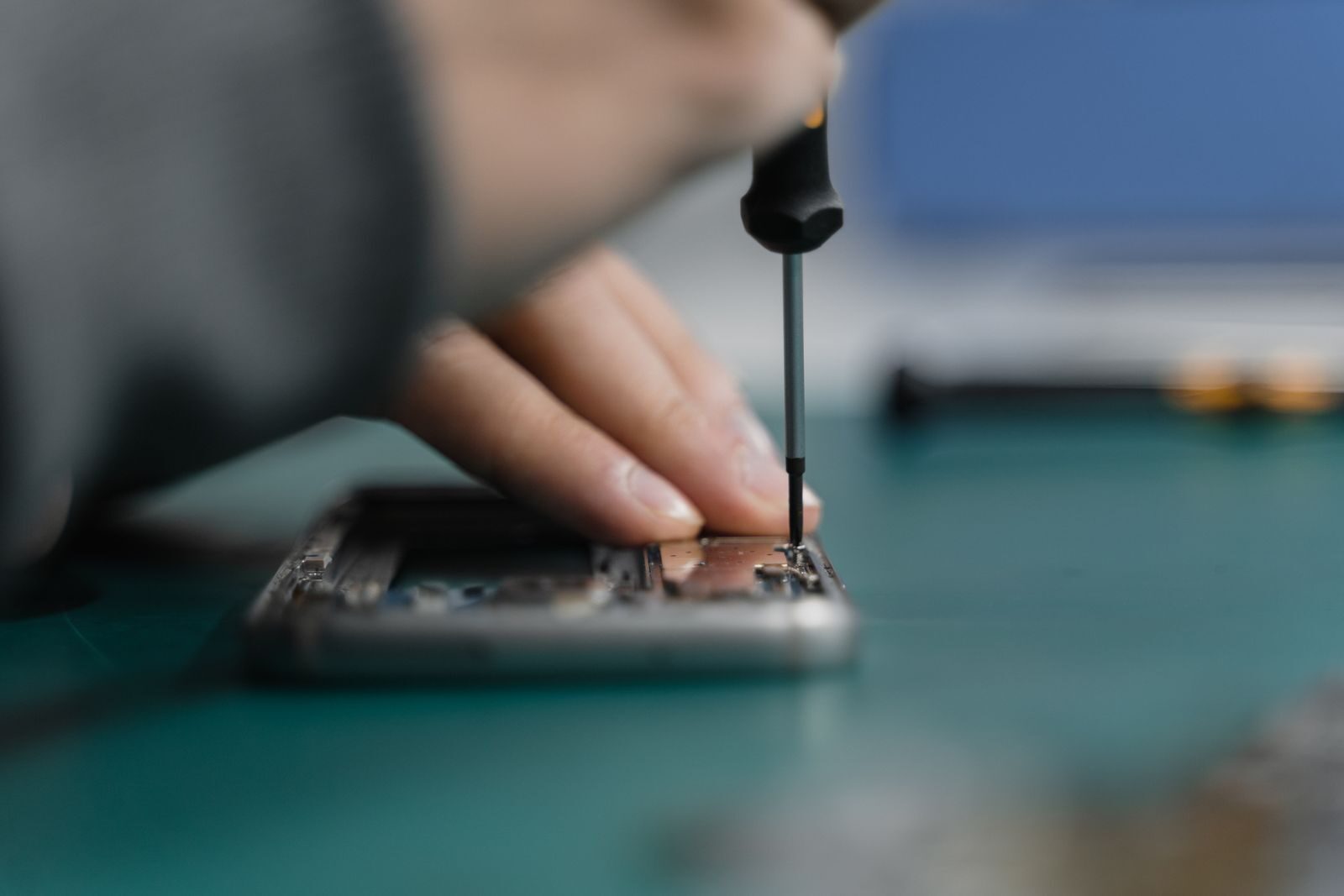
Since 31 July 2026, the EU Right to Repair Directive applies across all member states. For anyone who makes, imports or sells household appliances, smartphones, tablets, displays or e-bike batteries, repair is no longer a nice extra in the after-sales department. It is a legal obligation with deadlines, price expectations and information duties attached, and it reaches well beyond the end of the legal guarantee.
The rules are clear on what has to happen. They say much less about how a mid-sized company is supposed to organise it day to day: which spare parts must be in stock for how many years, how fast a repair has to be quoted and finished, and how to prove all of it later. That is an operations problem, and it is exactly where an ERP like Odoo earns its place.
This guide summarises the requirements and shows how to map each one to a concrete process in Odoo. It is a practical overview, not legal advice, so check the details for your products with your legal counsel.
The Directive (EU) 2024/1799 was adopted on 13 June 2024, entered into force on 30 July 2024 and had to be applied by member states from 31 July 2026. In Germany, it was implemented mainly through changes to the Civil Code (BGB), which the Bundestag passed in June 2026.
It works on two levels.
A repair obligation for manufacturers. For products covered by EU repairability rules, the manufacturer must repair a defective product on the consumer's request, also after the legal guarantee has expired. The repair must be offered at a reasonable price and within a reasonable time. The manufacturer may lend the consumer a replacement device during the repair, and if a repair is impossible, may offer a refurbished product instead. If the manufacturer is based outside the EU, the obligation passes to its authorised representative, then to the importer, then to the distributor.
Stronger repair rights within the legal guarantee. If a consumer chooses repair instead of replacement while the legal guarantee is running, the seller's liability period is extended by 12 months. Sellers must tell the consumer about this extension before the remedy is carried out.
Around these two pillars sit several supporting rules:
The repair obligation applies to products for which EU law already sets repairability requirements. Annex II of the directive currently lists:
The list will grow as new ecodesign rules add more product groups, so a company that is not covered today may well be covered in a few years.
The directive builds on product-specific ecodesign regulations, and those set the hard numbers your operations have to deliver.
For smartphones and slate tablets placed on the EU market since 20 June 2025, Regulation (EU) 2023/1670 requires, among other things:
The new EU energy label for these devices also shows a repairability class, so repairability is now visible at the point of sale.
For washing machines and tumble dryers, key parts such as motors, pumps, shock absorbers and springs have to be available for ten years. And under the EU Batteries Regulation, portable batteries in devices must be removable and replaceable by the end user from 18 February 2027, with some exceptions.
Put together, this means long-term spare parts planning per product model, predictable delivery times and documented repair processes. Spreadsheets and a separate ticket tool do not hold that together for seven or ten years.
Odoo does not make you compliant by itself. What it does is connect the processes the regulations touch, from the support request to the spare part, the repair, the invoice and the evidence, in one system. Here is how the obligations map to Odoo.
The Odoo Repairs app is the core. Each repair order records the customer, the product, its serial number, whether it is under warranty, the responsible technician and the scheduled date. Parts are added, removed or recycled on the order and move through inventory automatically, and the product moves stay traceable afterwards.
For repairs outside the warranty, Odoo creates a quotation from the repair order with the parts and a labour service. That gives you a consistent, documented price for every repair, which is what "reasonable price" will be measured against if a customer or authority asks.
Most repair requests start as a customer message. With Odoo Helpdesk, a ticket can lead directly to a return and a repair order, so the case history, the device and the communication stay linked. If you are still running support in a separate tool, our Odoo Helpdesk guide shows what moving it into Odoo looks like.
For appliances that are repaired on site, Odoo Field Service plans the technician visit and records the parts used at the customer's location. Our overview of the Odoo Field Service module covers that side in detail.
This is where the regulations hit operations hardest. In Odoo Inventory, spare parts are normal products with their own stock, reordering rules and vendor lead times. Min and max rules keep critical parts in stock, and purchase lead times show early whether a five to ten working day delivery promise is realistic.
What the standard does not know is the legal clock. We add a simple field per product model for the end of placement on the market, and from it Odoo calculates until when each spare part must remain available. Scheduled reports then show which parts are approaching the end of their obligation window and which have stock that is too low for the remaining period. A clear barcode and labelling rule for parts helps keep a large spare parts range under control.
The 12-month extension applies per device, so you need to know exactly which unit was repaired and when. Odoo tracks products by serial number from sale to return to repair. On that basis we configure a warranty end date per serial number and an automated action that extends it by 12 months when a repair is chosen as the remedy within the legal guarantee. The extension is then applied consistently, documented, and visible to every agent who opens the case.
The European Repair Information Form is essentially a binding quote with a fixed validity. In Odoo, it maps naturally to a quotation template with the defect description, price, expected repair time and a validity of 30 days, printed as a clean PDF in your branding.
Indicative repair prices and spare part prices can be published on your Odoo website or sold directly in an Odoo shop. Independent repairers and end customers then see the same transparent prices, which supports the requirement that parts must not be priced to discourage repair.
If you lend devices during a repair, treat them as serial-tracked stock in their own location. Odoo then shows at any time which loan unit is with which customer, and since when. Refurbished devices can be managed as separate products or variants with their own stock, prices and history.
Reasonable time and reasonable price are open terms, and the first disputes will be about them. Odoo reports on repair orders show average turnaround times, price ranges per repair type and parts consumption per model. That is the evidence you want ready before a customer, a consumer association or an authority asks for it.
A practical sequence for most manufacturers and importers looks like this:
When does the EU Right to Repair apply?
Directive (EU) 2024/1799 had to be applied by member states from 31 July 2026. Germany implemented it mainly through amendments to the Civil Code, passed by the Bundestag in June 2026. The product-specific rules for smartphones and tablets have applied since 20 June 2025.
Which products does the repair obligation cover?
It covers products listed in Annex II of the directive: washing machines and washer-dryers, dishwashers, refrigerating appliances, tumble dryers, electronic displays, vacuum cleaners, welding equipment, servers and data storage products, mobile phones, cordless phones and slate tablets, and goods with batteries for light means of transport. The list can be extended as new ecodesign rules are adopted.
Do manufacturers have to repair products for free?
No. Outside the legal guarantee, manufacturers may charge for repairs, but the price must be reasonable and must not discourage consumers from repairing. Within the legal guarantee, the normal guarantee rights apply, and choosing repair extends the seller's liability by 12 months.
How long must spare parts for smartphones be available?
Under Regulation (EU) 2023/1670, critical spare parts for smartphones and slate tablets must be available to professional repairers for at least seven years after the end of placement of the model on the market, and must be delivered within five to ten working days.
Can Odoo handle the 12-month warranty extension automatically?
Yes, with some configuration. Odoo tracks devices by serial number through sale, return and repair. We add a warranty end date per serial number and an automated action that extends it by 12 months when repair is chosen within the legal guarantee, so the extension is applied consistently and documented.
Is Odoo's standard Repairs app enough?
For many companies it covers the core: repair orders, parts, serial numbers, warranty flag and quotations. The parts that are specific to the new rules, such as spare parts obligation periods, the warranty extension and the repair information form, are usually added through configuration, automation and small custom modules.
The Right to Repair turns after-sales service into a regulated, long-term commitment. Companies that connect support, repairs, spare parts and evidence in one system can meet it without a separate compliance project for every product line.
FlexCode builds exactly these processes in Odoo, from repair orders and spare parts planning to the warranty logic and reporting. Request a demo or talk to us about your repair process, or email info@flexcodesys.com. One System. Total Control.