FlexCode Systems
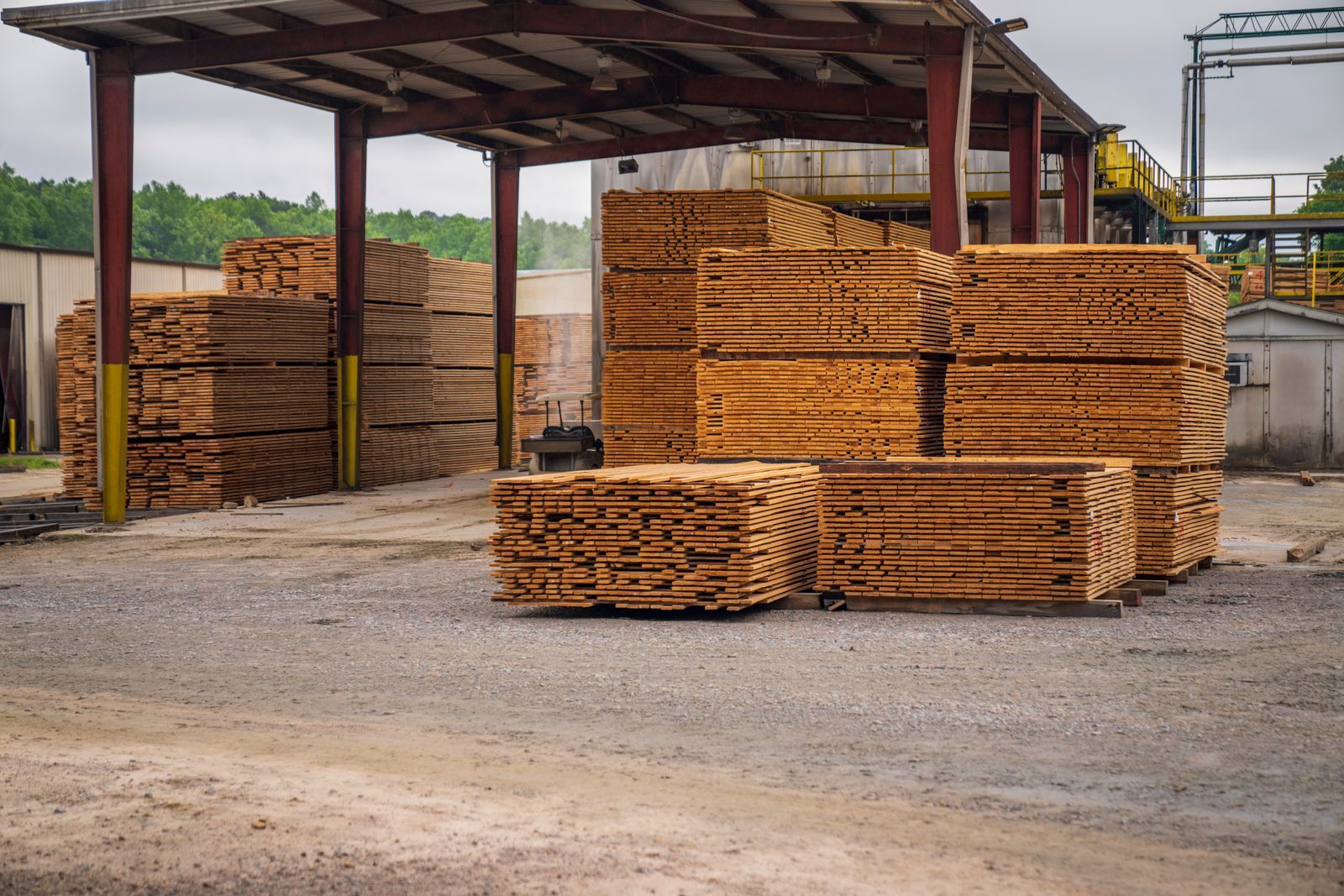
From 30 December 2026, the EU Deforestation Regulation (EUDR) applies to large and medium-sized companies. Anyone who places cattle, cocoa, coffee, palm oil, rubber, soy or wood on the EU market, or products made from them, must then be able to show that these goods are deforestation-free, legally produced and covered by a due diligence statement. Micro and small companies get six more months for most products.
After two postponements and a simplification in late 2025, many companies have stopped taking the deadline seriously. That is a risk. The core obligations did not go away: the geolocation of every plot, a reference number that travels with the goods, and five years of records. For a trader or manufacturer, this is not a reporting exercise at the end of the year. It touches purchasing, goods receipt, stock, production and sales every day, which makes it an ERP question.
This guide summarises what the EUDR requires after the 2025 amendment and shows how the obligations map to concrete processes in Odoo. It is a practical overview, not legal advice, so check the details for your products and your role with your legal counsel.
Regulation (EU) 2023/1115 entered into force in June 2023. It was postponed twice and amended by Regulation (EU) 2025/2650, published in December 2025. The basic rule in Article 3 stayed the same: relevant commodities and products may only be placed on the EU market, made available on it or exported if three conditions are met.
To prove the first two points, the operator who first places the goods on the market collects information, assesses the risk and, where needed, mitigates it. A central part of that information is the geolocation of every plot of land where the commodity was produced, together with the date or period of production. For plots larger than four hectares (except for cattle), a polygon outlining the plot is required, not just a single point.
All of this must be kept for five years from the date the goods were placed on the market or exported.
Penalties are set by the member states but the regulation fixes the minimum frame: fines with a maximum of at least 4% of the company's annual EU-wide turnover, confiscation of the goods and of the revenue from them, temporary exclusion from public procurement and public funding for up to 12 months, and for serious or repeated breaches a temporary ban on placing the goods on the market. In Germany, the Federal Office for Agriculture and Food (BLE) is the designated competent authority.
The EUDR covers seven commodities and the products listed in its Annex I that contain or are made from them:
The 2025 amendment removed printed products such as books and newspapers from the scope. The product list is also being adjusted further: a draft published by the Commission in May 2026 proposed adding products such as soluble coffee and certain palm oil derivatives, and excluding others, for example retreaded tyres, certain cattle hides, used goods, waste and packaging used only to carry other products. The Commission adopted a delegated act on Annex I in July 2026, which only applies once it has passed scrutiny by Parliament and Council and been published. Check the final list against the customs codes of your products before relying on any exclusion.
The scope is defined by customs codes (CN and HS codes), so the first practical step is always the same: find out which of your products fall under these codes.
The amendment did not remove obligations, but it distributed them differently along the supply chain. Your duties depend on your role.
Operators place a relevant product on the EU market for the first time, for example by importing it or by producing it in the EU. They carry the full due diligence: collect information including geolocation, assess the risk, mitigate it, and submit a due diligence statement in the EU information system before placing the goods on the market or exporting them. Only operators submit due diligence statements now.
Micro and small primary operators that produce the commodity themselves in a country classified as low risk, such as a small forest owner or cattle farmer in Germany, can submit a one-off simplified declaration instead of repeated due diligence statements. In some cases a postal address can replace plot coordinates.
Downstream operators are a new category. They place on the market or export products that were made from relevant products already covered by a due diligence statement or simplified declaration, for example a furniture maker that buys sawn wood from an importer, or a chocolate maker that buys cocoa butter from an EU supplier. They no longer submit their own due diligence statement. Instead, the first downstream operator after the operator must collect and keep the reference numbers of the statements or declarations that cover its inputs.
Traders make goods available on the market without being the first to place them there, for example a wholesaler or retailer. They also do not submit statements anymore.
For downstream operators and traders, the remaining duties are mainly about records and alertness:
In short: operators prove compliance, and everyone else must be able to show where the goods came from, where they went, and which reference numbers belong to them.
The Commission's simplification review of 4 May 2026 concluded that it does not propose further changes to the legal text. The EU information system for submitting statements was being reworked, with a staged reopening planned from June 2026 that adds new roles and simplified declarations. In other words, the December date is now the realistic planning basis.
Odoo does not make you EUDR compliant on its own, and there is no standard Odoo connector to the EU information system. What Odoo does well is the part that causes most of the work: keeping supplier data, reference numbers, lots and documents connected through purchasing, stock, production and sales, so that the evidence exists for every delivery without a parallel spreadsheet. Here is how the obligations map to Odoo.
Odoo products already have a field for the HS code, which many companies maintain for shipping and Intrastat. Combine it with a simple "EUDR relevant" flag and the commodity, added through configuration or Odoo Studio, and you get a reliable list of affected products. Purchasing, receiving and sales can then treat these products differently from the rest of your range.
For every supplier of in-scope goods you need to know their role (operator, downstream operator, trader), their address, and the documents they provide. In Odoo, this information sits on the vendor record, with contracts, certificates, risk assessments and geolocation files stored in the Documents app or as attachments. Missing or expired documents can trigger an activity for the purchasing team instead of being discovered during an inspection.
When you buy from an operator, the due diligence statement reference number (or simplified declaration ID) has to be collected and kept. In Odoo, we add this as a field on the purchase order line or the receipt, and make it mandatory for in-scope products. An automated rule can block validating a goods receipt for an EUDR product without a reference number, so the gap is caught at the warehouse door, not months later.
The heart of EUDR traceability in Odoo is lot and serial number tracking. Each incoming batch of coffee, cocoa, timber or rubber gets a lot number, and the lot record holds the reference number, the country of production and the geolocation file. Odoo's traceability report then shows, for any lot, where it came from and which deliveries and finished products it went into. If you already label goods with barcodes, our guide to rule-based product barcodes in Odoo shows how lot labels fit in.
Manufacturers mix inputs: one batch of chocolate contains cocoa from several lots. In Odoo Manufacturing, the components consumed in a manufacturing order are recorded with their lots, so the finished product lot inherits a traceable link to all reference numbers behind it. This is exactly the information a downstream operator or an authority will ask for.
If you are an operator or the first downstream operator, your customers will ask for the reference numbers that cover what you deliver. Odoo can print them on delivery notes and invoices, or send them in the customer portal or via EDI, derived automatically from the lots in each delivery. For traders, the same data answers the question of who supplied what to whom.
Odoo keeps purchase orders, receipts, lot moves, deliveries and attached documents linked together, with access rights and a full history. That makes the five-year retention obligation largely a matter of not deleting data and having a backup and archiving concept, which matters anyway for GoBD.
Two things go beyond configuration:
If your stock and purchasing still run in separate tools, see our overview of purchasing, stock and sales in one system for trading companies and our comparison of self-hosted warehouse management with Odoo Inventory.
With less than four months to go, a practical sequence for most companies looks like this:
When does the EUDR apply?
Since the amendment by Regulation (EU) 2025/2650, the EUDR applies from 30 December 2026 to large and medium-sized operators and to downstream operators and traders. Micro and small operators have until 30 June 2027 for most products, but wood products that were already covered by the EU Timber Regulation apply from 30 December 2026 for them too.
Which products are affected by the EUDR?
Cattle, cocoa, coffee, oil palm, rubber, soy and wood, plus the products listed in Annex I that contain or are made from them, such as chocolate, beef, tyres, paper, packaging and wooden furniture. Printed products were removed by the 2025 amendment, and a further update of Annex I is being finalised in 2026, so check your customs codes against the current list.
Do traders and downstream operators still have to submit due diligence statements?
No. Since the 2025 amendment, only the operator who first places the product on the EU market submits a due diligence statement, or a simplified declaration for eligible small primary producers. Downstream operators and traders must keep supplier and customer records for five years, and the first downstream operator must collect and keep the reference numbers of the statements covering its inputs. Non-SMEs among them must also register in the EU information system.
What does geolocation mean under the EUDR?
The operator must know the coordinates of every plot of land where the commodity was produced, together with the production date or period. For plots over four hectares, except for cattle, a polygon is required. This data is part of the due diligence statement and must be kept for five years.
How long do EUDR records have to be kept?
Five years from the date the product was placed on the market or exported. That includes due diligence information, reference numbers, and for downstream operators and traders the details of suppliers and customers.
Can Odoo submit due diligence statements automatically?
Not out of the box. Odoo has no standard connector to the EU information system. It can hold all the data a statement needs, and a custom module can use the system's web service interface to submit statements and store the reference numbers. For companies with few shipments, manual submission combined with clean data in Odoo is often enough.
The EUDR rewards companies that already know which lot came from which supplier and went to which customer. If that knowledge lives in emails and spreadsheets today, the December deadline is a good reason to move it into the system where purchasing, stock and production already happen.
FlexCode sets up exactly these processes in Odoo, from product flags and supplier documents to lot traceability, reference numbers on every document and, where it pays off, the integration with the EU information system. Request a demo or talk to us about your supply chain, or email info@flexcodesys.com. One System. Total Control.