FlexCode Systems
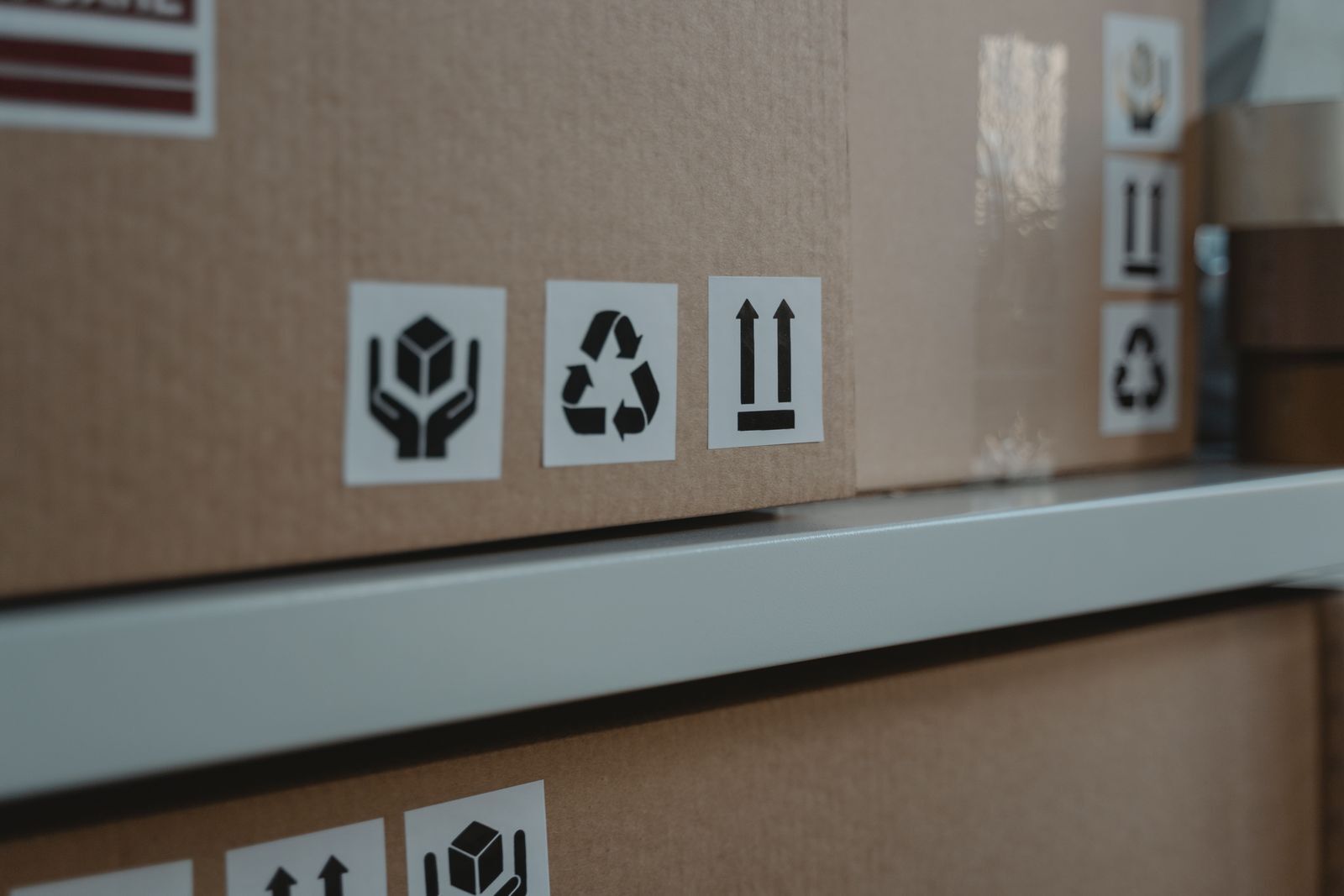
Since 12 August 2026, the EU Packaging and Packaging Waste Regulation (PPWR) applies directly in every member state. On the same day, Germany's Packaging Act (VerpackG) was replaced by the new Packaging Law Implementation Act (VerpackDG). For online retailers, brand owners and importers this is more than a new name for an old law: roles, registrations and evidence are being reorganised, and anyone selling across borders has extra obligations.
At the same time, a lot of wrong deadlines are circulating. Many articles claim, for example, that shipping boxes may have no more than 40 percent empty space since August. The regulation says something different. This guide therefore separates clearly what applies since 12 August 2026 from what only comes in 2028 or 2030, and shows how to organise the data and evidence for it in Odoo.
It is a practical overview, not legal advice. Check the details for your packaging and markets with your legal counsel or your packaging compliance scheme.
Regulation (EU) 2025/40 on packaging and packaging waste entered into force on 11 February 2025 and, under Article 71, has applied since 12 August 2026. It replaces the old Packaging Directive 94/62/EC and no longer needs to be transposed into national law. Germany's VerpackDG now only governs enforcement: responsibilities, the role of the Central Agency Packaging Register (ZSVR) and penalties.
For most companies the basic mechanism stays familiar. The Central Agency names three obligations that remain in place: registration in the LUCID Packaging Register, participation in a dual system for the relevant packaging, and data reporting. What is new is mainly who carries these obligations, and under which conditions.
The PPWR separates two roles that the old law combined:
According to the ZSVR, a brand principle applies: whoever has their name or brand on the packaging is usually both. Retailers that sell goods under their own brand, or change packaging in a way that may affect its conformity, become manufacturers themselves under Article 21.
Since 12 August 2026, Article 15 requires manufacturers to:
Importers must check before placing packaging on the market that the manufacturer has met these obligations, and must add their own name and address (Article 18). Suppliers of packaging and packaging materials must give the manufacturer all the information needed for its evidence (Article 16).
A note on context: many of the substantive requirements the declaration of conformity refers to, such as recyclability and minimum recycled content, only apply from 2030. The declaration grows over time. Agree with your packaging suppliers which evidence you need today and which follows later.
From 12 August 2026, food-contact packaging may no longer be placed on the market if it contains per- and polyfluoroalkyl substances (PFAS) above set limits (Article 5(5)): 25 ppb for any single PFAS in targeted analysis, 250 ppb for the sum of targeted PFAS, and 50 ppm for PFAS in total, including polymeric PFAS. Anyone shipping food, coffee, confectionery or snacks should ask suppliers for the corresponding evidence now.
This is the most important change for online retail:
Under Article 45(4), online marketplaces must obtain from sellers the registration number in the customer's country and a self-certification of compliance with producer responsibility before letting them sell. Fulfilment service providers must check this information when the contract is concluded and suspend their service if it is incomplete or wrong (Article 45(7) and (8)). If you cannot produce your registration numbers for every destination country, a marketplace or logistics partner may stop your sales.
All economic operators must, on request from market surveillance, be able to name who supplied them with packaging or packaged products and to whom they supplied them (Article 22). This applies for five years for single-use packaging and ten years for reusable packaging.
Many requirements currently described as applying "from August 2026" only apply later according to the regulation text:
| From | What |
|---|---|
| 12 February 2027 | Member states set penalties (Article 68). Packaging in an EPR scheme may be identified with a symbol in a QR code. |
| 31 December 2027 | End of the transition period for producers of packaging outside the dual system without ZSVR authorisation (according to the ZSVR) |
| 12 August 2028 | Harmonised label on material composition, at the earliest from this date or 24 months after the implementing act (Article 12) |
| 12 February 2029 | Labelling of reusable packaging, also depending on the implementing act |
| 1 January 2030 | Maximum 50 percent empty space in grouped, transport and e-commerce packaging (Article 24, depending on the Commission's calculation method) |
| 1 January 2030 | Packaging minimisation by weight and volume, recyclability grades A to C, minimum recycled content in plastics, bans on certain formats under Annex V |
| 1 January 2030 | 40 percent reuse target for certain transport packaging; cardboard boxes are exempt (Article 29) |
| 1 January 2038 | Only recyclability grades A or B |
On the empty space ratio: the regulation says 50 percent, not 40 percent, and the obligation applies from 1 January 2030 or three years after the implementing act on the calculation method, whichever is later. If you review your box sizes now you are well prepared, but there is no need to repack in a panic.
For the harmonised label, the information must also be available before purchase in online sales (Article 12(5)). Shops will therefore need to show it on the product page too.
Odoo does not have a dedicated PPWR module. But the core of the regulation is a data problem: which packaging belongs to which product, made of which material, with what weight, sold into which country, with what evidence? Exactly this data already comes together in an ERP. With Odoo 19, most of it can be covered by configuration, supplemented by a few custom fields and reports.
For each product we record the sales packaging with material and weight per unit, split by the material types you also report to your dual system (for example paper and cardboard, plastics, glass, tinplate). This is done with additional product fields created in Odoo Studio or a small module. Shipping boxes and filling material are set up as package types with dimensions and weight, so every delivery knows which outer packaging it used.
Because Odoo knows every delivery with product, quantity and delivery address, the amount of packaging placed on the market can be calculated per material, period and destination country: units sold times packaging weight, plus the shipping boxes used. A scheduled report delivers these figures for your dual system reports and the LUCID data report. This replaces the usual year-end spreadsheet estimate with traceable numbers.
The same report shows which EU countries you deliver to directly to end users, and in what volume. That tells you where you need an authorised representative. We store registration numbers and representatives per country as master data, so they are always at hand for marketplaces and fulfilment partners. How marketplace orders flow into Odoo is covered in our post on the Odoo OTTO Market integration.
Technical documentation, declarations of conformity and supplier PFAS evidence are stored in Odoo Documents and linked to the product and the supplier. An expiry date per document and an automated activity remind you when evidence needs updating or a five or ten-year retention period is still running. For suppliers that have not yet sent their evidence, Odoo creates a task for purchasing.
Purchase and sales history, receipts, deliveries and, where needed, lots are already linked in Odoo. The market surveillance question of where packaging came from and where it went can therefore be answered in minutes instead of days. The basis is clean warehouse management, as described in our post on warehouse management with Odoo.
With dimensions on products and package types, you can analyse which boxes are used for which orders and where oversized boxes are regularly in use. That already pays off today, because less volume means lower shipping and licence fees, and it prepares you for the empty space ratio from 2030. If your shop also runs on Odoo, product and packaging data are directly available to show on the product page later. For a comparison of shop systems, see our post WooCommerce vs Odoo eCommerce.
Does the 40 percent empty space limit for shipping boxes apply since August 2026?
No. Article 24 of Regulation (EU) 2025/40 sets a maximum empty space ratio of 50 percent for grouped, transport and e-commerce packaging. It applies from 1 January 2030 or three years after the implementing act on the calculation method, whichever is later.
Do I have to register again in LUCID after 12 August 2026?
Usually not. According to the Central Agency Packaging Register, an existing registration remains valid. You do have to check whether details such as brand names, packaging types or an authorised representative need updating under the new rules, and do so promptly.
What applies if my shop also delivers to Austria or France?
If you sell directly to end users in another EU country, you count as a producer there. Under Article 45(3) of the PPWR you must appoint an authorised representative for extended producer responsibility by written mandate in each of those countries and meet the local registration and reporting duties.
Does the VerpackDG fully replace the German Packaging Act?
Yes, since 12 August 2026. The substantive obligations now sit directly in the EU regulation. In Germany, the VerpackDG governs enforcement, meaning responsibilities, the role of the Central Agency and penalties.
Does Odoo have a ready-made PPWR module?
No. But Odoo provides the building blocks: product and delivery data, package types, Documents, automated activities and reports. Material and weight per packaging, the quantity report by country and the storage of evidence are added through configuration and a few custom fields.
When will the harmonised recycling label appear on packaging?
At the earliest from 12 August 2028, or 24 months after the Commission's implementing act, whichever is later. For online sales, the information must then also be available before purchase.
The PPWR turns packaging into a master data and evidence question. Companies that manage products, packaging, deliveries and documents in one system can handle reports, authorised representatives and marketplace requirements without spreadsheet chaos, and are prepared for the 2028 and 2030 stages.
FlexCode sets up exactly these processes in Odoo, from packaging data on the product to the quantity report and the storage of evidence. Request a demo or talk to us about your packaging data, or email info@flexcodesys.com. One System. Total Control.